Highlights
- Potting soil is formulated for containers, while garden soil is for in-ground use.
- Container mixes prioritize drainage, aeration, moisture retention, and weight.
- Garden soil can compact inside pots and restrict airflow around roots.
- Many potting products are technically soilless mixes.
- Peat, coir, bark, perlite, and vermiculite create suitable container conditions.
- Choosing the right medium can support healthier roots and consistent growth.
What Is the Biggest Difference Between Potting Soil and Garden Soil?
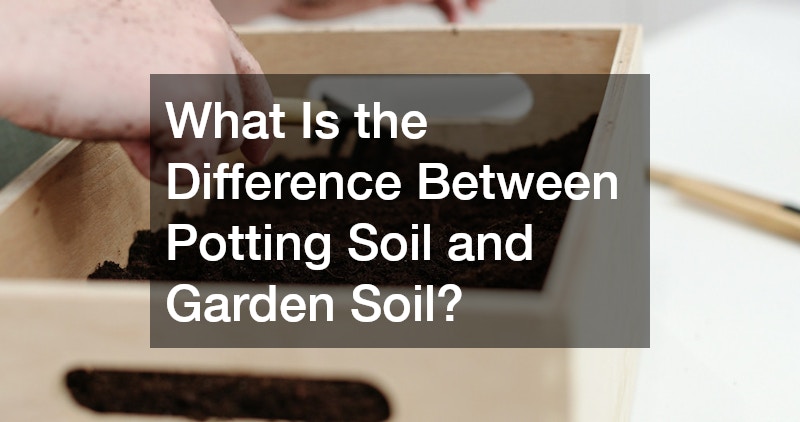
The biggest difference between potting soil and garden soil is how each material is intended to perform. Potting soil is formulated for containers, where roots depend on the material for moisture, oxygen, and support.
Garden soil functions in the ground, where roots can spread and water can move through surrounding layers. Iowa State University Extension and Outreach explains that garden soil can compact inside containers, resulting in poor drainage and aeration. A soil that performs well in a flower bed may therefore create difficult conditions inside a planter. Choosing the product based on where the plant will grow is more useful than assuming bagged soils are interchangeable.
Why Does Potting Soil Work Better in Containers?
Potting soil works better in containers because it is lighter and more porous than ordinary garden soil. Container plants need enough moisture to avoid drying out, but their roots also require oxygen. University of Illinois Extension notes that container media should provide good aeration and drainage while retaining enough moisture for plant growth. Commercial mixes combine materials with different properties to create that balance. A porous medium allows excess water to drain while leaving open spaces around roots. It can also make planters easier to move than containers filled with dense soil. For houseplants and patio planters, a container-specific mix creates a suitable root environment.
What Ingredients Are Commonly Used in Potting Mixes?
- Peat moss or coconut coir can retain moisture while keeping the mixture light.
- Perlite creates pore space and can improve drainage.
- Vermiculite helps hold moisture and may retain some nutrients.
- Composted bark can add structure and organic material.
- Some formulas contain fertilizer, lime, or wetting agents.
- University of Georgia Cooperative Extension explains that commercial potting mixtures are often soilless and may combine peat moss, vermiculite, perlite, and ground pine bark.
- Because formulas vary, gardeners should read the ingredients and select a mixture suited to the plant, container size, and drainage needs instead of relying only on the product name.
Why Can Garden Soil Be a Poor Choice for Pots?
Garden soil can be a poor choice for pots because confined conditions change how ordinary soil behaves. Once soil is placed in a shallow container, drainage can slow, and the material may lose pore space that normally holds air. Iowa State University Extension and Outreach explains that garden soil used alone in containers can compact and make watering more difficult. Dense soil may remain wet too long, especially when a pot has limited drainage or receives little sunlight. It can make large containers heavier. These issues do not make garden soil poor material overall; they show why soil intended for open beds may not perform the same way inside a pot.
When Is Garden Soil the More Appropriate Option?
- Garden soil is generally more appropriate for outdoor beds where it can interact with existing soil.
- It may add volume to planting areas when the label recommends that use.
- Depending on the formulation, it can be blended with native soil or organic matter.
- It may be useful around landscape plants when it suits drainage needs.
- Garden soil should not automatically replace potting mix because a container remains outdoors.
- University of Illinois Extension advises against using garden soil alone in containers because drainage and aeration can be reduced.
- The practical rule is to match the product to its environment, whether roots grow in open ground, a raised bed, or a container.
Does Potting Soil Always Contain Actual Soil?
No. Potting soil does not always contain mineral soil. Many products sold under that name are soilless growing media made from ingredients chosen to hold water, create air space, reduce weight, or improve drainage. University of Georgia Cooperative Extension describes commercial potting mixtures as soilless blends that may contain peat moss, vermiculite, perlite, and ground pine bark. The terminology can be confusing because “potting soil” and “potting mix” are used similarly on packaging. Instead of relying only on the product name, gardeners should check the ingredients and intended use. A succulent mix may emphasize rapid drainage, while a general-purpose container mix may retain more moisture for plants with different needs.
Can Garden Soil and Potting Mix Be Used Together?
Garden soil and potting mix can sometimes be combined, but the proportions and purpose matter. Filling a pot with unamended garden soil can lead to compaction, poor aeration, and drainage problems, while a limited amount may work in certain homemade mixtures. University of Illinois Extension provides an example of a soil-based container blend using equal parts garden soil, peat moss, and perlite or coarse builder’s sand. That recipe shows why garden soil needs modification before use in a container and why it should not be treated as a complete substitute for potting mix. Gardeners wanting a simpler option can choose a prepared container mix designed for consistent drainage and moisture control. Anyone making a custom blend should focus on maintaining drainage, moisture retention, and enough pore space to prevent the root zone from becoming excessively dense after watering. The finished mixture should also remain light enough to support healthy root growth and allow excess water to move away from the container.
How Can Gardeners Choose Between Potting Soil and Garden Soil?
Gardeners can choose between potting soil and garden soil by first considering where the plant will grow. Containers usually benefit from a lightweight, porous medium designed to balance drainage and moisture, while in-ground beds can use garden soil as part of a broader soil system. Plant type matters because succulents, vegetables, herbs, flowers, and houseplants have different moisture preferences. Reading the label, checking ingredients, and considering drainage can prevent avoidable problems. The strongest approach is to match the growing medium to the root environment instead of treating every bagged soil product as equivalent. Making that distinction can support healthier roots, easier watering, and more consistent plant growth throughout the season.