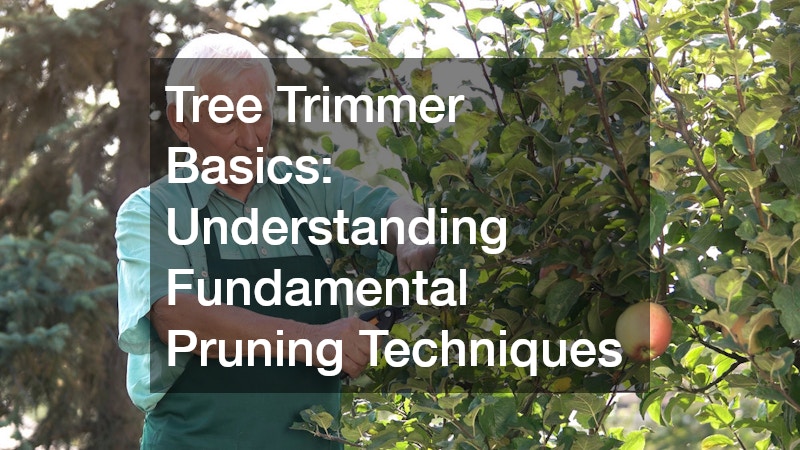
Proper pruning is one of the most important aspects of maintaining healthy, safe, and visually balanced trees. Whether managing residential landscaping or commercial grounds, understanding how cuts affect growth can make a significant difference in long-term tree health. A professional tree trimmer applies specific techniques that guide structure, remove hazards, and encourage strong development without compromising stability.
When done correctly, pruning improves airflow, reduces disease risk, and prevents unnecessary strain on branches. However, improper cuts can lead to decay, weak regrowth, or even structural failure over time.
This guide breaks down the essential principles behind effective pruning so property owners and aspiring arborists can better understand what goes into responsible tree care practices.
Understanding Core Pruning Principles
Core pruning principles focus on removing selective growth to improve structure, balance, and long-term vitality. Instead of cutting randomly, pruning decisions are based on branch positioning, tree age, and overall health objectives. Trimmers evaluate which limbs compete for dominance and which ones create unnecessary weight distribution issues. This selective approach ensures that energy is directed toward stronger branches while weaker or damaged limbs are removed.
Proper structural pruning also considers natural growth patterns and species-specific characteristics. Some trees respond best to minimal intervention, while others require more assertive shaping to maintain safety and form. Understanding these differences prevents over-pruning, which can stress the tree and reduce its ability to recover from cuts. Skilled application of technique ensures that growth remains predictable and sustainable over time.
Long-term success in pruning depends on consistency and observation over multiple seasons. Monitoring how trees respond to cuts allows adjustments in future pruning cycles. Environmental factors such as soil quality, rainfall, and sunlight exposure also influence how aggressively pruning should be performed.
Timing, Tools, and Structural Cuts
Timing plays a critical role in effective pruning because trees respond differently depending on seasonal cycles. Dormant seasons often allow for more controlled cuts, reducing stress and sap loss. A tree trimmer working within these windows can shape growth more efficiently while minimizing long-term damage. Understanding when to prune is just as important as understanding how to prune.
Tools also influence the precision and safety of structural cuts. Sharp, well-maintained equipment reduces tearing and promotes faster healing in affected branches. Proper technique ensures that cuts are made at the correct angle, which helps prevent disease entry and supports stable regrowth. Without appropriate tools, even well-planned pruning strategies can fail to deliver intended results.
Structural cuts are the most sensitive part of pruning because they directly affect long-term stability. These cuts determine how well a tree distributes weight and how effectively it can recover from stress. Incorrect placement may lead to decay, weak attachments, or uneven growth patterns that compromise safety. Professional standards emphasize clean cuts that allow trees to compartmentalize damage more effectively over time.
Common Mistakes and Long-Term Tree Health
One of the most common pruning mistakes is removing too much foliage at once. This practice can shock the tree, limiting its ability to produce energy through photosynthesis. It may also lead to excessive regrowth that is weakly attached and prone to breakage. Understanding moderation is essential for maintaining long-term health.
Another issue arises when pruning is performed without regard for branch structure or weight distribution. This can create imbalances that increase the likelihood of splitting during storms or heavy wind conditions. Trees rely on carefully balanced growth patterns, and disrupting these patterns can reduce overall stability. Thoughtful planning helps avoid these unnecessary risks.
A well-trained tree trimmer understands that every cut influences future growth patterns and structural integrity. Careful observation after pruning is just as important as the cutting process itself because trees respond gradually over time. Adjustments should be made based on how the tree develops in subsequent seasons to ensure balanced recovery. Long-term success depends on discipline, timing, and an understanding of biological responses to pruning stress.
Effective pruning is a combination of timing, technique, and observation that ensures trees remain strong and safe throughout their life cycle. Understanding the principles behind proper pruning helps property owners make informed decisions about tree care and maintenance. While basic knowledge is useful, complex structural issues often require professional expertise to avoid long-term damage or instability. Regular inspection and careful planning can significantly reduce risks associated with improper cutting techniques. Trees are dynamic living systems that respond to every cut, making thoughtful intervention essential.